
Recovery for High School Athletes
What you do off the field is more important than what you do on it. Every parent I work with wants the same thing: their kid healthy, on the field, and playing at their best. The hard part isn't the sport itself. It's everything around the sport, the recovery between practices, the nutrition, the structural work that keeps small problems from becoming season-ending ones. This page is about that part.
Book a first visitPain Stopping Doesn't Mean Healed
Athletes are great at pushing through pain. But pain stopping isn't the same as being fixed.
Think of a cut on your arm. Day one it bleeds. Within a week or two it's scabbed over and looks fine. The pain is gone. But underneath, the tissue is still rebuilding. Collagen is reforming, the structure is still soft. If you tear it back open, it heals weaker the second time.
Soft tissue injuries work the same way. The pain leaves before the healing finishes. The true process for healing is closer to 18 months. You usually hit about 90% within the first six months, and the last 10% comes in the next six to twelve.
That doesn't mean kids can't play during that time. It means we treat them like the injury is still healing, even when it doesn't feel like it.
What Actually Moves the Needle
There are three things almost no high school athlete is doing well.
Sleep
Eight to ten hours, consistently. This is when the body repairs.
Nutrition
Real food, enough of it, timed around training. Not pre-workout shakes and energy drinks. (I'm a board-certified clinical nutritionist with over 900 hours of coursework. We get into specifics here when it matters.)
Structural work
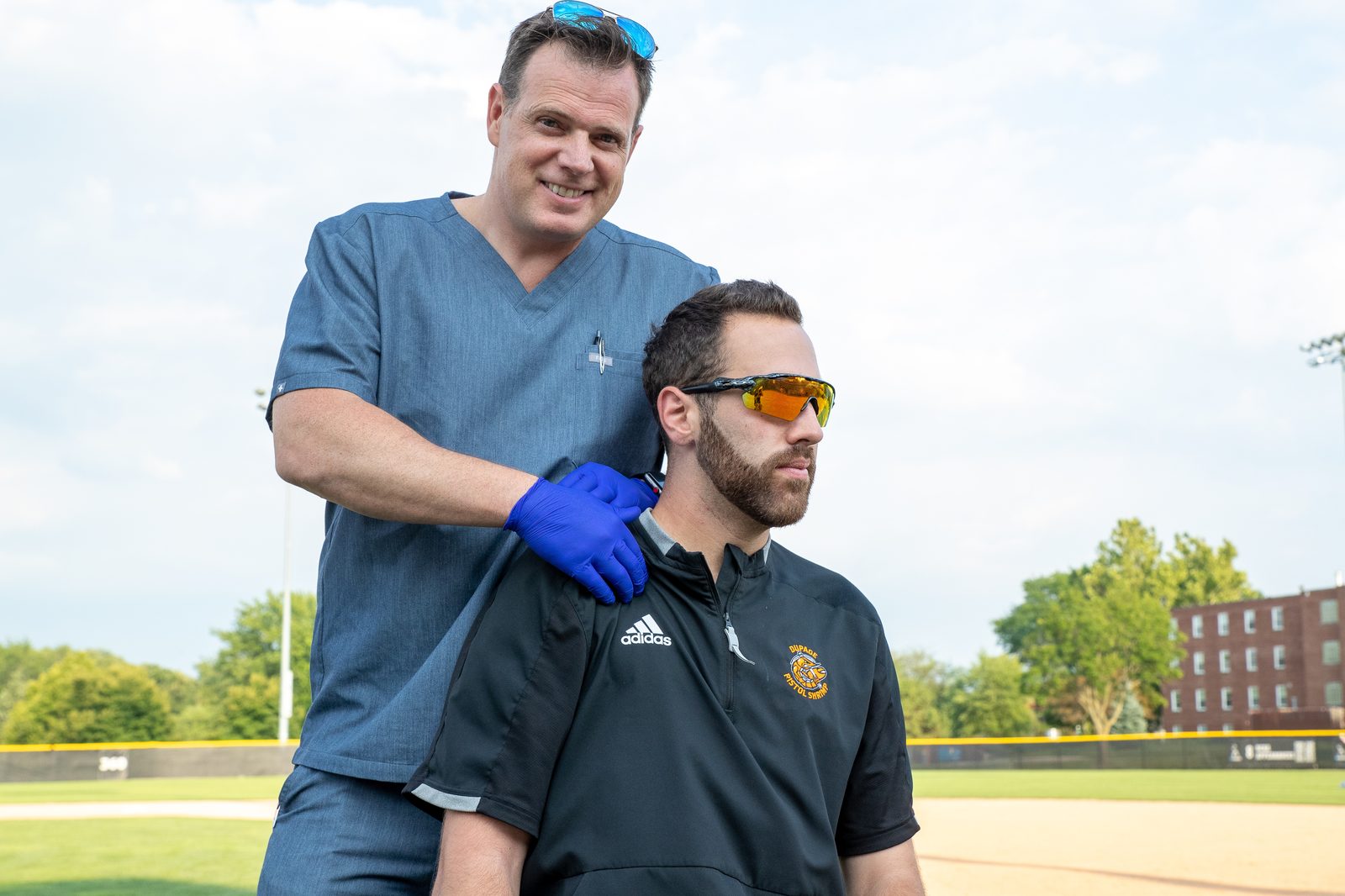
Catching the small things, a hip rotation that's off, a hamstring that's not firing, an old ankle injury that never fully resolved, before they cascade into something that takes a player out for a season.
Return-to-Play That Actually Works
The temptation when an athlete gets injured is to rest until they feel better, then jump back in. That's how you get re-injuries.
A real return-to-play protocol has stages. We move through them based on what the athlete's body is doing, not what the calendar says. If you push the next stage before the body's ready, you're rebuilding pain into the system.
Tissue tolerance
Rebuild the injured tissue's capacity to handle load again.
Range of motion
Restore full, pain-free movement through the joint.
Strength
Build strength back around the area that was compensating.
Sport-specific load
Reintroduce the demands of the actual sport, in stages.
Most of the kids I work with are back to full participation faster than their friends who tried to white-knuckle through it. Not because we're rushing. Because we're doing it right.
A Story That Sticks With Me
A few years back I had a high school pitcher come in. His shoulder was hurting and his velocity was tanking. His fastball had dropped to 78 mph, and the recruiters who had been watching him were quietly walking away. The line for a scholarship at the time was 90 mph.
We worked the shoulder for nine months. Got him from 78 to 88. He was throwing harder, the shoulder was healthy. But we couldn't push past 88. Every outing it was 87, 88, never 90.
Then one day, almost as an afterthought, he mentioned his ankle had been bothering him. Said it didn't feel like it was pushing right when he came set on the mound. We worked on the ankle. Next time he stepped on the rubber, he hit 90.
He got the scholarship.
You come in for one thing. The fix is usually something else.
Why I Like Working with High Schoolers
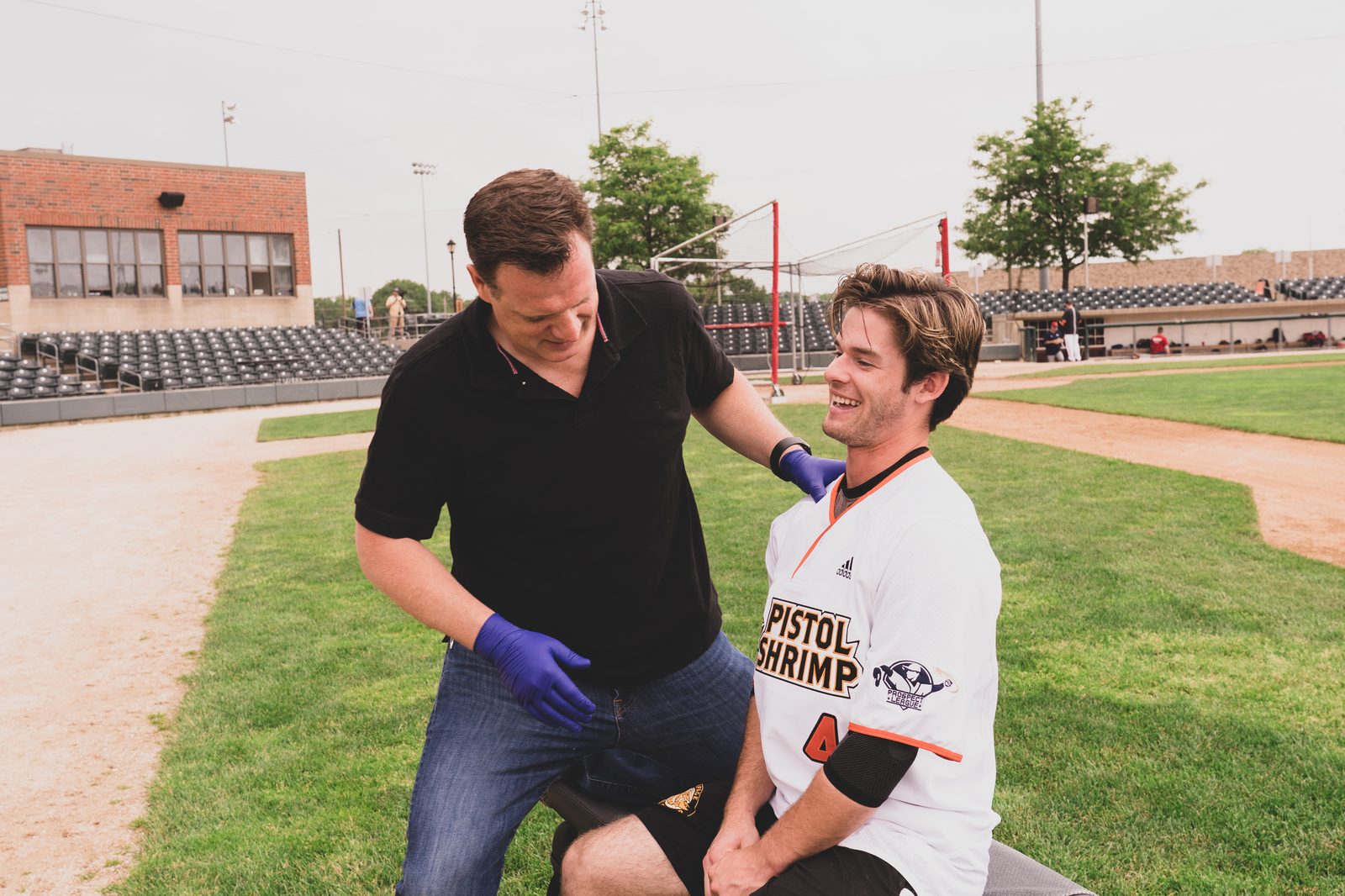
High school athletes have something most adult patients don't: motivation. They want to play. They will do the treatment plan. They will do the homework. They will do anything to get back on the field.
When parents bring their kid in, my job is straightforward: figure out what's actually going on, build a plan, and give them the tools to do the off-field work that determines outcomes. The kid does the rest.
Ready to talk about your athlete?
Book a first visit and let's figure out what's actually going on.
Book a first visitCommon Questions From Parents
My kid says they're "fine", should I bring them in anyway?
If they've had an injury in the last 18 months, even one that seemed to heal, yes. The body compensates around old injuries in ways that show up later as something seemingly unrelated.
Will this affect their season?
We work around your schedule. If they're in season, we keep them on the field while working on the underlying issue. If they're between seasons, that's the best window for structural work.
Is this covered by insurance?
Pure Health & Wellness is in network with Blue Cross Blue Shield PPO, Aetna PPO, PHCS PPOs, and United Healthcare PPO. You may also see the practice listed in your insurance directory as Hunter Family Chiropractic, PC. Same practice, same doctor. Call (630) 435-0100 to confirm coverage for your specific plan.
How is this different from a regular sports medicine clinic?
A solo practice means continuity: same provider, every visit, watching how your kid responds week to week. The treatment plan adapts as their body responds. That's hard to replicate when you're being passed between three different providers.