
Whiplash
The most common whiplash story is not pain at the crash scene. It is feeling fine for a week, and then not.
Book your first visitBook your first visit online or call (630) 435-0100.
Auto injury visits usually bill through the accident coverage, not your health plan. Call and I will walk you through it.
Here is the whiplash story I hear most: the accident was two or three weeks ago. The ER checked you out, nothing was broken, they said you were fine. And now your neck is stiff every morning, the headaches have started, and turning to check a blind spot hurts in a way it did not the day of the crash.
That timeline is normal, and it is exactly the kind of case I treat. I am Dr. Justin Hunter, a chiropractor in downtown Naperville, over 20 years in practice, and delayed-onset accident injuries respond well to the right care, when they get addressed instead of waited out.
Why the symptoms show up late
At the scene, adrenaline is running and the injured tissue has not had time to respond. Over the following days, inflammation builds in the strained muscles and ligaments, the joints that took the whip start to guard, and the body organizes itself around protecting the neck. That protective stiffening, not the crash itself, is usually what you are feeling at week two.
The headaches follow the same path. A neck that stopped moving properly refers pain up into the skull, which is why so many post-accident headaches are really neck problems wearing a disguise. The migraines and headaches page covers how I sort those out.
None of this means something was missed at the ER. Their job was ruling out the dangerous things. This is the layer underneath, and it responds to a different kind of care.
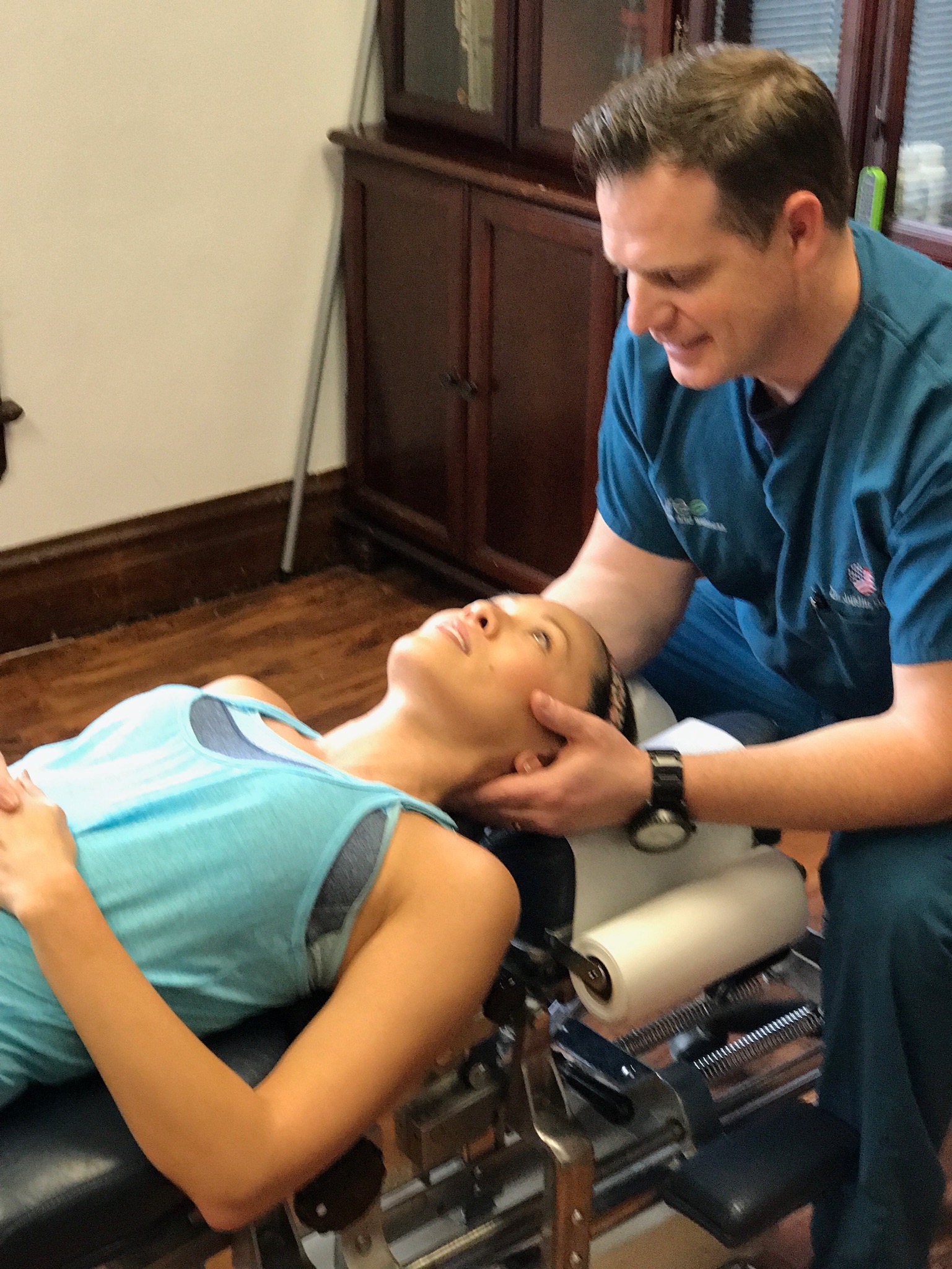
What whiplash actually is
In a rear-end collision your body accelerates with the car and your head lags behind, then snaps forward. The muscles and ligaments of the neck absorb that whip, and they get strained the way any tissue does when it is loaded violently and fast.
The strain itself usually heals. What lingers is what the strain leaves behind: joints that locked down to protect the area and never unlocked, muscles that learned to guard and kept guarding, and a neck that moves differently than it did before the crash. Left alone, that pattern is how a two-week injury becomes a two-year stiff neck.
What happens on your first visit
We start with the accident: what happened, what the ER found, what has changed since, and what hurts now that did not hurt then. Bring any records or imaging from the hospital if you have them.
Then a thorough examination of the neck, upper back, and everything that guards them: joint by joint movement, neurological screening, and hands-on assessment of what is tight, what is weak, and what is not moving. Accident cases get documented carefully here as a matter of good medicine, and thorough records also matter practically when an insurance claim is involved.
You leave knowing what was actually injured, what is just guarding, and what it will take. First visits run about an hour.
How I treat it
Gently at first, because a recently injured neck earns its trust back in stages. Restoring movement to the joints that locked down, settling the muscles that have been guarding since the crash, and progressing week by week as the tissue tolerates more.
Then the part that determines whether you are still stiff next year: rebuilding the strength and movement the neck lost while it was protecting itself, and getting your head turning like it did before the accident, checking blind spots included.
No prescriptions, no injections, no surgery, and if your case needs imaging or a specialist, I will tell you at the first visit and point you to the right one.
Delayed-onset accident injuries respond well to the right care, when they get addressed instead of waited out.
When to go to the ER instead
Fresh off an accident, the emergency room comes first, not a chiropractor. Go there, or go back, if you have any of these:
- A new accident in the last day or two that has not been medically evaluated at all
- Severe midline neck pain, or pain with any weakness, numbness, or tingling into the arms
- Confusion, memory gaps, worsening headache, or anything that feels like a concussion getting worse
- Loss of bladder or bowel control, or trouble walking
The honest timeline
Most whiplash improves substantially with the right care over weeks, not days. The mistake people make is not choosing the wrong treatment. It is waiting, on the theory that it will work itself out. Some do. The ones that do not are much harder to unwind at month six than at week three.
If you are not responding the way I expect, I will tell you and change the plan, not stretch it.
Ready to get your neck moving like it did before the crash?
The mistake people make is waiting. The ones that do not resolve are much harder to unwind at month six than at week three.
Cleared at the ER but still not right weeks later? That is exactly the visit this page is about.
Common Questions
How soon after an accident should I come in?
Once you have been medically cleared, sooner is better. The guarding pattern that makes whiplash linger sets in over the first few weeks, and it is easiest to interrupt early. If your accident just happened and nobody has examined you, start with a medical evaluation first.
The ER said I was fine. Why do I still hurt?
The ER ruled out fractures and emergencies, which is their job. Strained muscles, guarded joints, and the stiffness that builds over the following weeks are a different layer, and it is the layer this kind of care is built for.
Do I need a lawyer before I can get treated?
No. You need care first; the paperwork follows either way. Whether an attorney is involved is your decision and has no bearing on whether or how I treat you.
Will this go through my health insurance?
Accident care often bills differently than regular visits, through medical payments coverage on the auto policy or through the claim itself rather than your health plan. Call (630) 435-0100 and I will walk you through how it works for your specific situation before you book.
I was in an accident months ago and never got treated. Too late?
No. Older injuries have more guarding built around them and take longer to unwind, but a neck that stiffened after an old accident is one of the most common things I see, and it often responds well to care.
Do I need a referral?
No. You can book a first visit directly. If you already have imaging or records, send them ahead or bring them with you. Helpful, but not required.